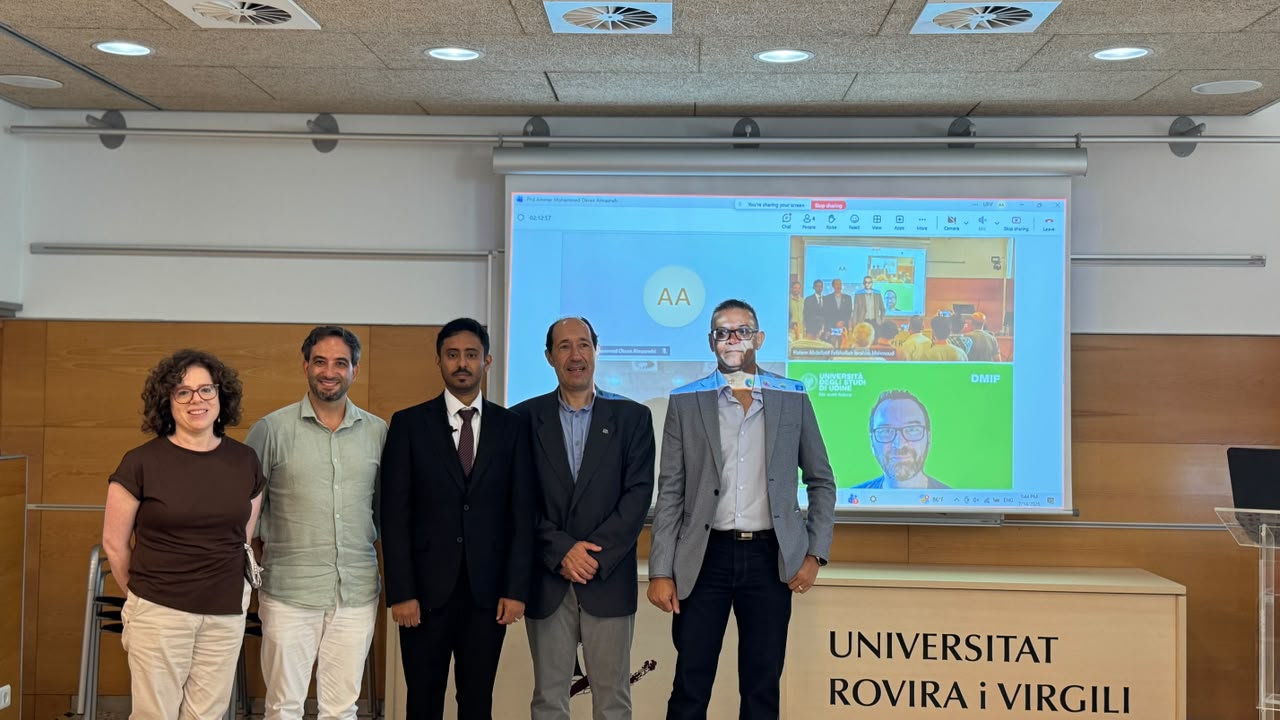
Ammar2026-08-20 at 14.38.51

Ammar Mohammed Okran defended his PhD

Data-Efficient and Context-Aware Deep Learning Models for Crack Analysis: From Robust Detection to Precise Segmentation

Abstract:  Cracks are among the earliest and most critical indicators of structural deterioration in civil infrastructure, including road pavements, concrete bridges, and buildings, and their timely detection and precise delineation are essential for ensuring safety, prioritizing maintenance, and reducing long-term repair costs. Yet, automated crack analysis remains a fundamentally challenging computer vision (CV) problem. Cracks are typically thin, irregular, and fragmented, often embedded within complex backgrounds and affected by illumination changes, surface texture variations, shadows, and noise. Moreover, acquiring dense pixel-level annotations for segmentation is labor-intensive and costly, limiting the scalability of fully supervised approaches. While machine learning (ML) and, more recently, deep learning (DL) methods have significantly advanced automated inspection, many existing models still struggle to handle complex real-world scenes, achieve robust cross-dataset generalization, and maintain data efficiency.
(more…)

Read More

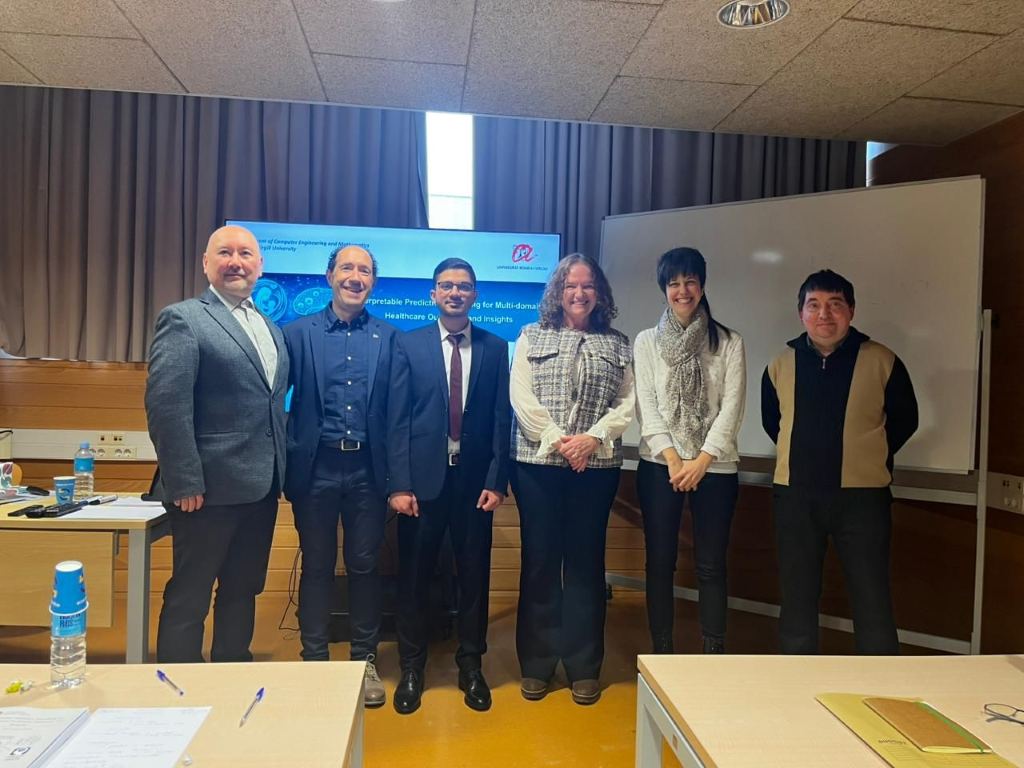
mudefence

Muhammad Mursil defended his PhD

Interpretable Predictive Modelling for Multi-domain Healthcare Outcomes and  Insights

Abstract:  Modern healthcare faces a critical need for predictive models that can reliably guide clinical decisions, yet many state-of-the-art artificial intelligence (AI) approaches remain “black boxes”. Current machine learning (ML) and deep learning (DL) models often achieve high accuracy but provide limited transparency. They typically predict outcomes without explaining why they occur or how those outcomes would change under different interventions (the “what-if” scenarios). Furthermore, models trained on narrow datasets often fail to generalize across different hospitals or patient populations, limiting their real-world reliability. These challenges call for a shift from focusing solely on accuracy to developing decision-oriented AI that is transparent and interpretable.

(more…)

Read More

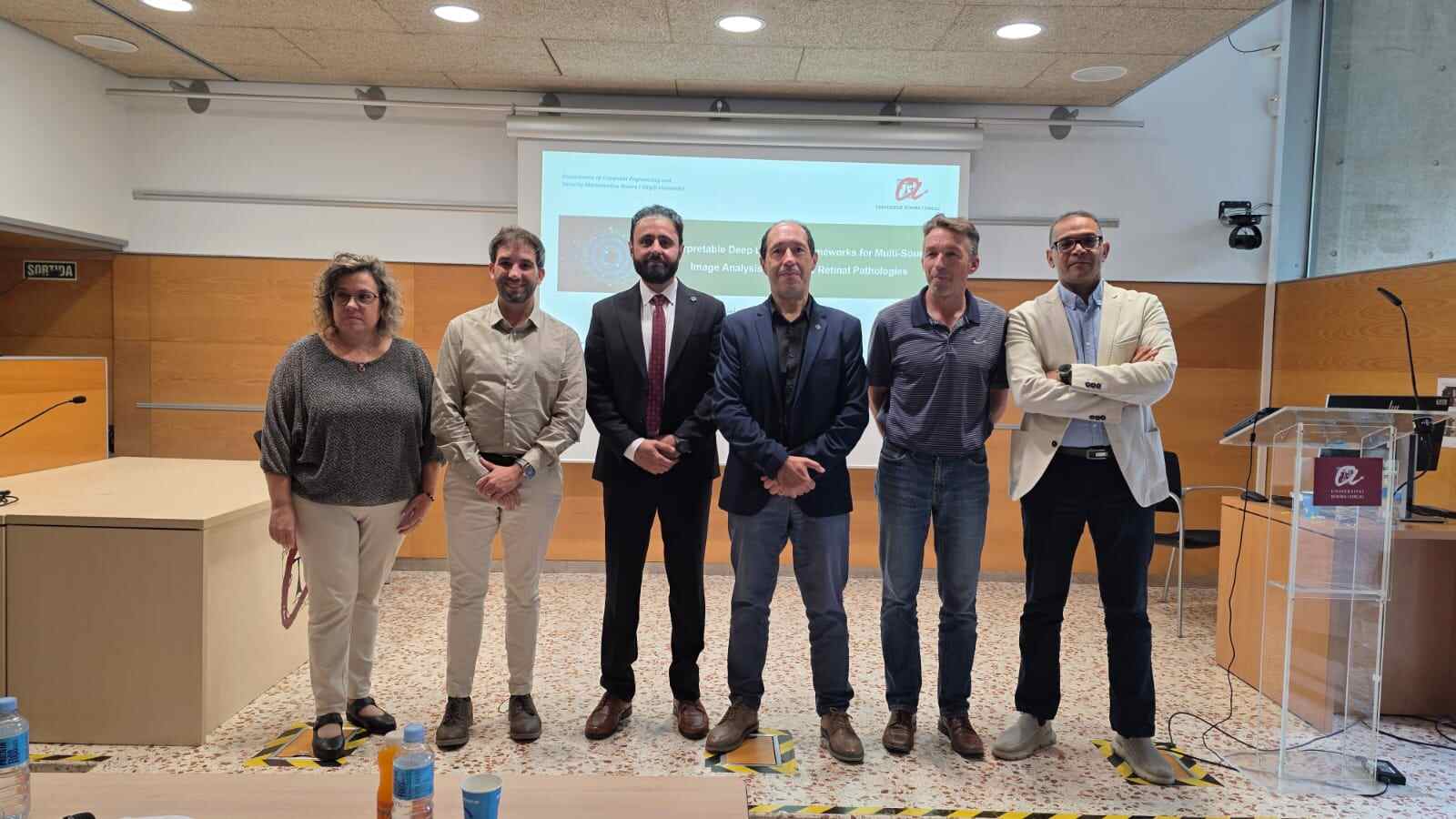
1000207378

Saif Khalid Musluh defended his PhD

Interpretable Deep Learning Frameworks for Multi-Source Image Analysis of Diabetic Retinal Pathologies

Abstract:  Integrating artificial intelligence (AI) and computer vision into medical imaging has led to transformative advances in diagnostic healthcare, particularly within ophthalmology. Among various eye-related diseases, Diabetic Retinopathy (DR) is one of the most prevalent and severe complications of diabetes mellitus, posing a leading cause of blindness globally. Early identification and precise classification of Diabetic Retinopathy (DR) are crucial for effective intervention and treatment planning. However, the increasing volume of retinal images that need to be analyzed and the scarcity of expert ophthalmologists necessitate the development of reliable automated screening systems. This thesis introduces a comprehensive deep learning framework designed to enhance the reliability and scalability of automated Diabetic Retinopathy (DR) diagnosis by addressing three fundamental challenges: image quality assessment (first), referable DR classification (second), and interpretability of both image quality and diagnostic outputs (third).

(more…)

Read More